
AI Integration Business Automation Services for Smarter Operations
AI integration business automation is no longer a future-facing experiment. It is now one of the fastest ways to reduce operational drag, eliminate repetitive admin, and create a business that can scale without adding unnecessary overhead. In competitive markets like Dubai, the companies that move first are not simply using AI tools in isolation. They are integrating AI into the way leads are handled, teams communicate, data moves, and decisions get made. Most businesses already have the software they need. What they lack is the system logic that connects those tools into one intelligent operating layer. Erahaus builds AI integration business automation systems that connect your workflows, remove manual bottlenecks, and turn disconnected software into a more efficient commercial engine. Our service includes workflow design, AI model orchestration, ClickUp implementation, CRM logic, server-side automation, MCP-based maintenance systems, and visibility tooling that helps clients operate faster while staying technically in control.
The Strategy Behind Effective AI Integration Business Automation
The value of AI integration business automation does not come from adding a chatbot to your website and calling it innovation. It comes from identifying where time, accuracy, and speed are being lost across the business, then redesigning those workflows so AI can support real operational movement. That may mean automating lead qualification, connecting CRM actions to internal alerts, generating content workflows, routing support tickets, maintaining websites proactively, or reducing the number of manual steps between inquiry and conversion.
Most automation projects fail because they are tool-led rather than system-led. We start with business logic first. We map the workflow, define what should trigger what, and identify which platforms need to exchange data in real time or at controlled intervals. That structure ensures your AI integration business automation setup supports commercial outcomes instead of creating a fragile layer of disconnected prompts and plugins.
Our automation work also connects naturally with broader digital infrastructure. For brands improving acquisition, AI workflows can feed directly into your website development strategy and strengthen the way leads move through your SEO services ecosystem. When content operations are part of the challenge, these systems can also support a more scalable content marketing workflow. For businesses actively exploring the role of AI in marketing operations, this page should also connect conceptually with your existing articles on generative AI for content and LLM-powered conversational search.
We also include the operational layer around the models themselves. Erahaus builds with Claude and GPT-5.5 for drafting, reasoning, classification, summarisation, code support, and agentic workflows; partners that with ClickUp as the command centre for internal execution; uses Ahrefs and Semrush for AI visibility and search opportunity analysis; and deploys MCP-connected systems for server oversight and website maintenance across client environments. These are not add-ons. They are included in the way we structure the service.
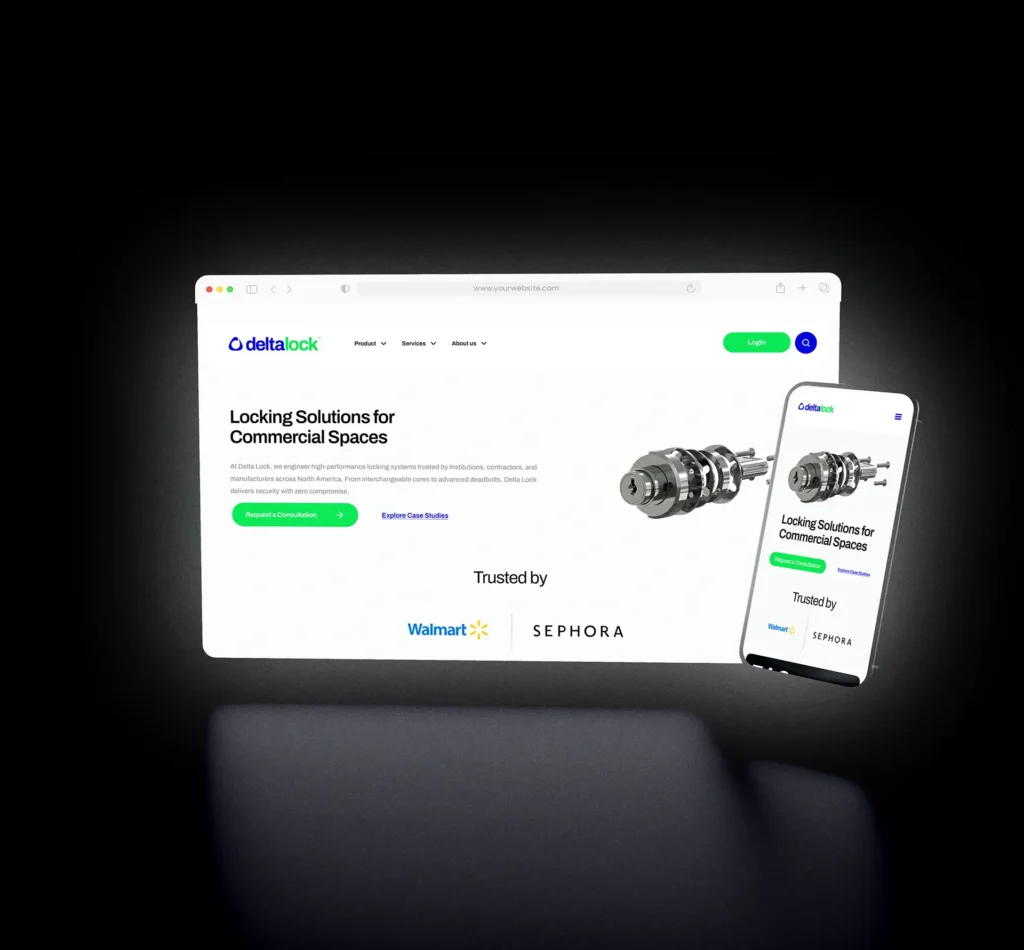
DeltaLock®
DeltaLock operates with a broad product environment where access logic, user permissions, and operational consistency matter. For a business dealing with security hardware and enterprise-grade systems, keycode management cannot rely on scattered notes, inconsistent staff processes, or disconnected handovers between departments. The workflow has to be structured, controlled, and visible.
For DeltaLock, AI integration business automation can be structured around keycode management workflows: logging requests, validating request types, assigning approvals, documenting changes, alerting the relevant team member, and maintaining a traceable record inside the operating system. Internal actions can be pushed through ClickUp, escalations can be routed through designated Super Agents inside the company, and approved actions can trigger updates across the wider workflow automatically. The result is tighter operational control, less admin drift, and a cleaner security process that does not depend on memory or informal messaging.
We do not build on whatever platform is easiest for the developer. Every technology decision is made to serve three commercial objectives: fast load times, search engine compatibility, and long-term scalability. Our core development stack has been tested, refined, and deployed across industries from real estate and B2B manufacturing to ecommerce businesses and hospitality brands.
Our standard stack includes WordPress as the CMS backbone for its flexibility and SEO maturity, combined with WooCommerce for ecommerce functionality, custom Gutenberg blocks for design precision, Cloudflare for CDN delivery and DDoS protection, and LiteSpeed or Nginx server configurations for maximum response speeds. Where projects demand it, we integrate REST APIs, third-party CRMs, automation workflows, and custom PHP modules. Every build is tested against Core Web Vitals benchmarks before launch.
Core Web Vitals Performance Chart
| Automation Element | Generic Setup | Erahaus Approach |
|---|---|---|
| Workflow Logic | Basic one-step automations with no commercial strategy | Business-led workflow mapping tied to real operational outcomes |
| AI Usage | Standalone prompts with no system integration | AI layers connected to CRM, forms, content, and internal operations |
| Error Handling | No fallback logic when tools fail | Documented triggers, validation rules, and graceful failure paths |
| Reporting | Limited visibility across disconnected apps | Centralised reporting and cleaner operational oversight |
| Scalability | Breaks when volume increases or processes change | Built to evolve with new tools, team roles, and growth stages |
| Maintenance Layer | Reactive fixes after problems appear | MCP-connected monitoring and maintenance for websites and servers |
AI Integration Business Automation Comparison
We do not recommend AI software based on what is trending that month. Every integration decision is made to support reliability, workflow clarity, and long-term maintainability. The goal is not to add more dashboards. The goal is to reduce human friction, preserve data integrity, and make the business faster without making the system more fragile.
Our AI integration business automation stack typically combines automation platforms, CRM systems, APIs, databases, AI models, structured prompts, webhook logic, and controlled fallback rules. Depending on the project, this can include WordPress or ecommerce triggers, custom API connections, Claude and GPT-5.5 powered reasoning layers, CRM routing, ClickUp task orchestration, Super Agent escalation logic, internal notification systems, MCP-connected maintenance tooling, and reporting dashboards. Every workflow is documented, tested, and designed to fail gracefully when a third-party service becomes unavailable.
Our AI Automation Stack Built for Reliability, Speed, and Operational Scale
Our AI Integration Business Automation Process
Poorly planned automation creates more confusion than the manual process it replaces. We follow a defined delivery process that keeps the system practical, testable, and aligned with the way your business actually operates. This is the steps section clients need to understand before anything is built.
Stage 01 — Workflow Audit
We review your current process, identify repetitive tasks, spot failure points, and define where AI integration business automation can create the most immediate operational leverage. This includes lead handling, internal approvals, CRM movement, maintenance tasks, content production, and reporting logic.
Stage 02 — System Mapping
We map the software environment, user roles, data handoffs, trigger points, and approval layers. This gives us a clean picture of what needs to connect, what should stay manual, and where fallback controls are required. At this stage we define where Claude, GPT-5.5, ClickUp, CRM systems, MCPs, Ahrefs, and Semrush fit into the operating model.
Stage 03 — Automation Architecture
We design the workflow logic, define conditions, structure prompts where AI is involved, and document how the automation should behave under normal and exception scenarios. We also define Super Agent roles inside the company where decisions, escalations, or approvals need a human checkpoint.
Stage 04 — Integration and Build
We connect the relevant platforms, configure APIs, webhooks, CRM actions, internal notifications, ClickUp task logic, AI layers, and MCP maintenance systems, then test each step against the approved workflow map.
Stage 05 — QA and Stress Testing
Every automation is tested for trigger accuracy, edge cases, data formatting, duplication risk, and rollback handling. If a process touches customer communication, access control, maintenance operations, or revenue workflows, we validate it with extra caution.
Stage 06 — Launch and Optimisation
Once the workflow is live, we monitor behaviour, refine prompt logic, improve routing accuracy, and adjust the system based on real operational feedback. If required, the setup can later connect into your website development strategy and broader lead-generation stack. This is also where ongoing MCP-led website and server maintenance becomes part of the retained service for clients who need continuous technical oversight.
ClickUp Operating System
Operational inefficiency often hides inside internal approvals, lead assignment, reporting updates, and handovers between teams. These are the kinds of workflows that rarely feel urgent until growth exposes how much time they absorb every week. A company can have good people, strong software, and clear goals, yet still lose time because no central operating layer is coordinating how work moves.
Erahaus can partner with ClickUp as the internal command centre for execution, using Super Agents inside the company to manage escalations, oversee approvals, and keep workflows moving. AI integration business automation then sits on top of that structure: tasks get generated automatically, summaries are created, context is passed between teams, and the business gains a more intelligent operating rhythm instead of a scattered one.
MCP Maintenance System
For most agencies, maintenance is reactive. A client reports an issue, someone checks the site manually, and fixes happen after the damage has already interrupted business. That approach does not scale well when multiple websites, hosting environments, and client needs are active at the same time.
Erahaus uses MCP-connected systems for server and website maintenance across client accounts. These systems can support monitoring, issue handling, response workflows, technical triage, and maintenance operations with much better continuity. Instead of maintenance existing as a separate afterthought, it becomes part of the wider AI integration business automation service that supports all our clients.

AI Visibility Is Part of the Service, Not a Separate Conversation
Businesses are now being discovered through search, answer engines, and AI-assisted recommendation layers at the same time. That means operational AI and visibility AI should not be treated as separate departments. When the same company is investing in AI integration business automation, content systems, and search growth, the strategy becomes much stronger.
Erahaus uses Ahrefs and Semrush to identify visibility gaps, content opportunities, entity coverage, topical depth, and the kinds of pages that support stronger discoverability across both traditional SEO and emerging AI search behaviour.
| Automation Element | Generic Setup | Erahaus Approach |
|---|---|---|
| Workflow Logic | Basic one step automations with no commercial strategy | Business led workflow mapping tied to real operational outcomes |
| AI Usage | Standalone prompts with no system integration | AI layers connected to CRM, forms, content, and internal operations |
| Error Handling | No fallback logic when tools fail | Documented triggers, validation rules, and graceful failure paths |
| Reporting | Limited visibility across disconnected apps | Centralised reporting and cleaner operational oversight |
| Scalability | Breaks when volume increases or processes change | Built to evolve with new tools, team roles, and growth stages |
| Maintenance Layer | Reactive fixes after problems appear | MCP connected monitoring and maintenance for websites and servers |
FAQs about AI integration Business
What types of processes can Erahaus automate?
We can structure automations for lead handling, CRM updates, internal notifications, content workflows, support triage, reporting, approval flows, keycode management, maintenance operations, and other repetitive operational tasks. The right use case depends on where manual work is slowing the business down most.
Do we need to replace our current software to use AI automation services?
In most cases, no. A well-planned AI integration business automation setup is designed to work with the software you already use, as long as those tools support the necessary integrations, APIs, or automation triggers.
How long does an AI integration business automation project take?
A focused workflow automation project can often be scoped and delivered within 3 to 6 weeks. Larger projects with multiple departments, custom API work, or CRM restructuring will take longer depending on complexity.
Do you use Claude, GPT-5.5, ClickUp, Ahrefs, and Semrush inside the service?
Yes. Claude and GPT-5.5 are used inside selected automation and reasoning workflows. ClickUp can be used as the operational command layer, including Super Agent structures inside the company, while Ahrefs and Semrush support AI visibility, search opportunity analysis, and content direction.
Are MCPs for server and website maintenance included in your services?
Yes. MCP-connected maintenance systems are part of how Erahaus supports website and server maintenance across clients. We use them to make technical oversight, issue handling, and maintenance workflows more structured and more responsive.
Are you ready?
Build a Business That Runs With Less Friction
If your team is spending too much time moving information manually, repeating the same tasks, or chasing workflow errors across disconnected software, it is time to redesign the system. Erahaus builds AI integration business automation workflows that reduce admin, improve response speed, improve AI visibility, and create a more scalable business operation. That includes the models, the workflow logic, the ClickUp operating layer, the CRM structure, and the MCP maintenance systems behind ongoing client support.